
The Economics of Old Buildings
What 393 years of accumulated maintenance taught me about preservation and paying for the past

A North Adams, Massachusetts landlord called to sell me his early 1900s building. His favorite feature was the roof: “it’s slate, it lasts forever.” If I didn’t know better, I would have moved forward at his price. Instead I discounted my offer by $30,000. He’s holding out for someone who doesn’t understand slate.
That call is the thesis of this piece. Old buildings reward humility and punish romanticism: treated well, they age gracefully. Done casually, they eat your lunch. And if you buy and operate small buildings, every pre-war system is mis-priced by somebody — the seller, the buyer, or both. Sellers price the charm; you price the systems.
My credentials are hard-fought and expensive. I took over management of a 24-unit building built in 1903, and bought and renovated a 3-family and 4-families built in 1880 and 1900. There are 393 years of accumulated maintenance between them. The trees in the 3-family’s floors were alive when Benjamin Franklin was writing with a quill; they were saplings during the witch hunts in 1690s Salem. History is under your foot. Unlike a museum, you are in charge of the maintenance bill.
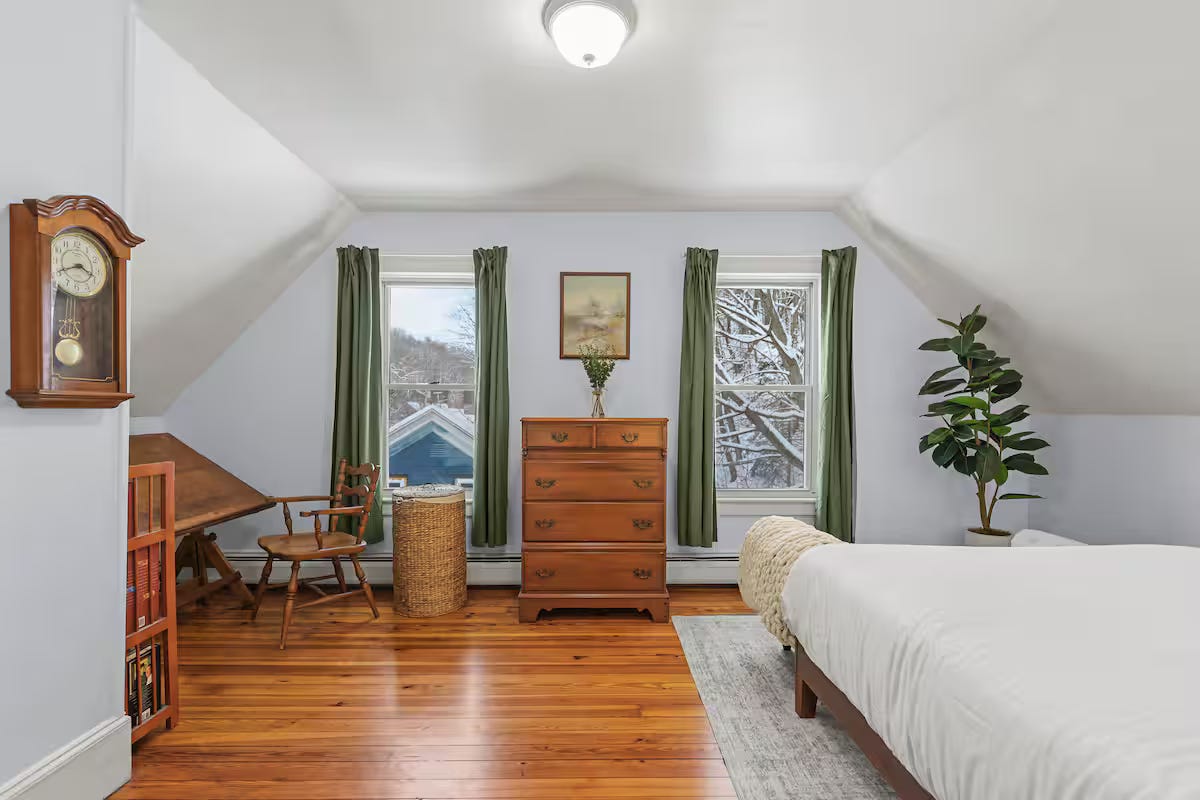
I used to think preservation enthusiasm was a euphemism for refusal to change. Operating these buildings changed my mind: preservation is what makes one room feel full and welcoming, and another lonely and sterile — and it’s why an old-growth floor leases an apartment that a vinyl plank can’t. It fills the heart. The rest of this is about what it does to your numbers.
Some historical systems are liabilities, not charms
The 24-unit has a 100+ year old elevator. It breaks down regularly. The machine moves by the winding and release of a 100-year-old steel drum — an installation type banned in the 1930s–1940s. The few technicians who still understand drum elevators wield immense power, and they know it. The steam-punk crank and gear machine room should be an exhibit not infrastructure.
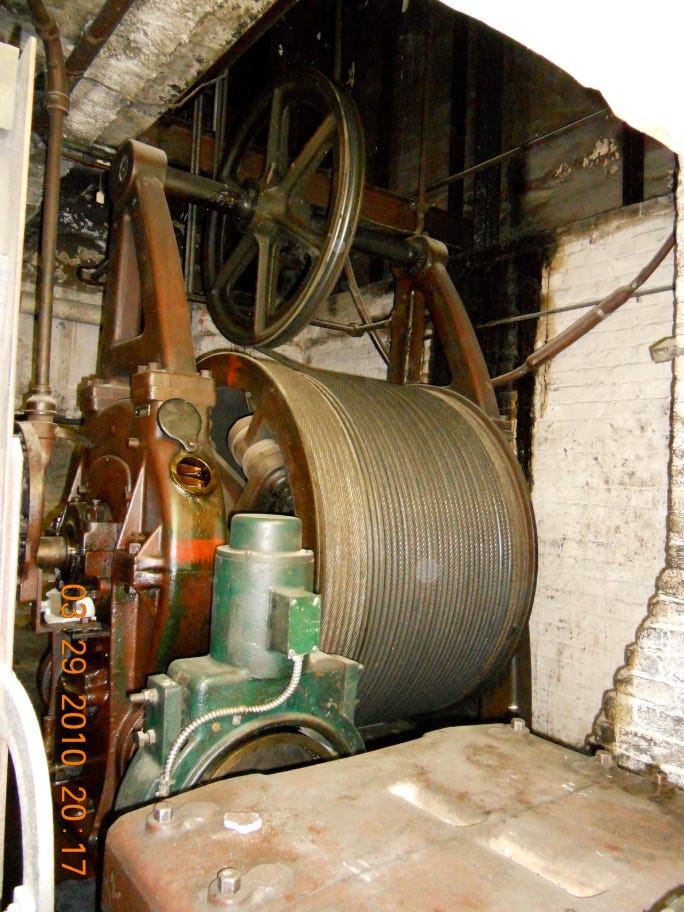
Here’s what that power costs. We raised dues by 30% in 2024 just to get ahead of the break–bandaid-fix cycle. The elevator was set to consume 20% of our budget before long-term resolution in 2025; a healthy elevator should consume less than 5%. There’s also a 2021 lawsuit our insurer’s attorney is still responding to — it named the homeowners association as liable under a lease that implied a working elevator. Read your leases for implied amenities, because someday an attorney will.
We cycled through three elevator contractors in two years — the second ghosted us after we asked for a summary of work — before hiring a consultant. Hire the consultant before the third contractor, not after. And make sure they strictly consult and don’t also contract; that’s what aligns the incentives. Ours confirmed that further repair, rather than a $500,000 replacement, was prudent, and introduced us to the contractor we use to this day. It was the best $2,250 we spent on that dastardly machine.
On your next walkthrough, ask what moves the elevator. If the answer is a drum, avoid it if you can. Otherwise, budget for the consultant — and expect elevate-d maintenance bills.
Materials last only as long as their weakest fastener
Folk wisdom says slate roofs last forever, and intuitively rock-based shingles should — rocks have lasted millions of years. But those ancient stones are held up by rusty, man-made nails, and the nails last about 100 years. When one rusts out, more follow. Repairing one tile often breaks several others, which drives up the cost. And once you find one of the three 60-year-old guys who still work on slate, get used to his presence: he will be back every two years with a $500 bill. An old slate roof isn’t a roof; it’s an annuity payable to one of three guys, indefinitely. That’s why North Adams — the land of late 19th century buildings — is also the land of slate-to-asphalt conversions.
Which brings us back to the seller. He was marketing a roofer’s annuity as a premium feature. My $30,000 wasn’t a haggle; it was the line item he hadn’t priced. Underwrite the nails, not the stone.
Assume nothing is insulated
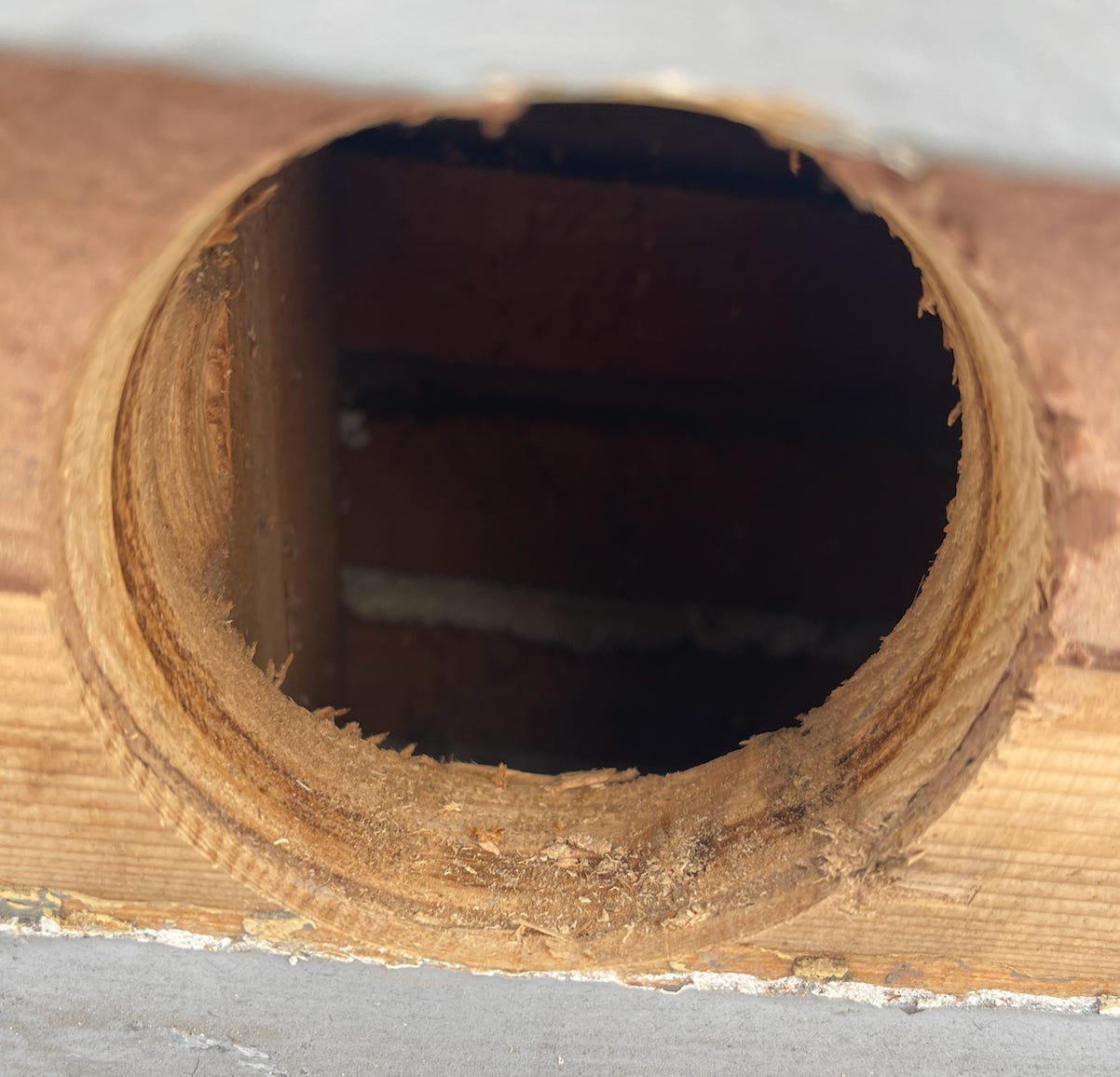
A friendly landlord tipped me off to knock on my walls. I protested — what, to say hello? No: listen for a hollow ring. Sure enough, my walls sounded like a drum. MassSave came to inspect, and what they found I could not believe: zero insulation. I had the fanciful idea that houses of this era were stuffed with horse hair. It was wood siding, a few inches of nothing, and the interior plaster-and-lath wall.
The knock test is the cheapest diligence you will ever run, and you should underwrite zero insulation until a wall tells you otherwise. The fix can be heavily subsidized: MassSave covered much of the $10,000 bill — blown cellulose (shredded paper) in the wall cavities, foam boards in the attic rafters, weatherstripped doors, foam-sealed foundation drafts. On one unit, the gas bill dropped from $205 in November 2025 to $133 in December 2025.
One wrinkle to budget: the program inspects before it pays. My inspector required work orders first — certify the absence of knob-and-tube wiring (fire risk) and reduce the carbon monoxide output of a boiler. $1,300 later, I was ready to rock and roll. Treat utility programs as subsidized capex, and carry a line for the prerequisites.
Electrical systems remember every shortcut
In one unit, the microwave, refrigerator, electric stove, coffee machine, and a few lights all shared one circuit. The breaker had tripped so many times that it failed — at night, of course. The tenant was kind and accepted non-emergency service the next day, and for $450 an electrician moved the microwave and lights onto their own circuit. No issues since.
The detail that kept it at $450: the panel had space for the additional breaker. So open the panel during diligence. Spare slots make overloaded circuits a punch-list item; a full panel turns the same symptom into an entirely different capex conversation.
Forgiving materials age better than rigid ones
Foundations went from mortaring big rocks together, to cut stone blocks, to concrete, to reinforced concrete with vapor barriers. My building is from the big rocks era (the rocks courtesy of Ice Age glaciers, which tilled them up from deep in the ground). Water is the enemy of field stone: it sneaks into cracks, freezes, widens them, and eventually finds the basement, where it breeds mold and weakens wood beams. The prior owner had capped most of the dirt floor with concrete and piped the seepage to a pump — helpful, but the basement stayed moist through spring and summer. The final fix came, despite my skepticism, from MassSave: a thick plastic sheet over the water’s route and the remaining dirt. I now get chapped lips walking into the basement.
So don’t discount a building for field stone; discount it for unmanaged water. Priced properly, the fix is a pump, a concrete cap, and a plastic sheet — not a foundation replacement. Field stone is in some ways a great system: lime and stone are comfortable getting wet and drying repeatedly, unlike concrete, and they fail slowly and visibly, allowing for repair. Concrete can fail without warning, creating a false sense of security. These primitive foundations have outlasted early 20th century concrete, and many expect them to outlast reinforced midcentury concrete too. ICF versus field stone is the slowest race no one is watching; it will outlast any living person today.

The closing tab
Old buildings shine in their old-growth floors and their field stone foundations, if the water is managed. The mispriced liabilities are drum elevators, slate at the end of its nails, walls full of nothing, and circuits that remember every shortcut. On your next walkthrough: ask what moves the elevator, underwrite the roof’s nails, knock on the walls, open the panel, and trace the water’s path through the basement.
My tuition ran a 30% dues raise, contractors who ghosted, a $2,250 consultant, and over $100,000 in renovation investment. After two years of stewardship, I can say the learning curve was worth it — and now I can say it in dollars. The man with the slate roof is still holding out for a buyer who can’t.
As someone who doesn’t know much about old buildings, this was very eye opening. Love how you turned these hard lessons into clear wisdom.